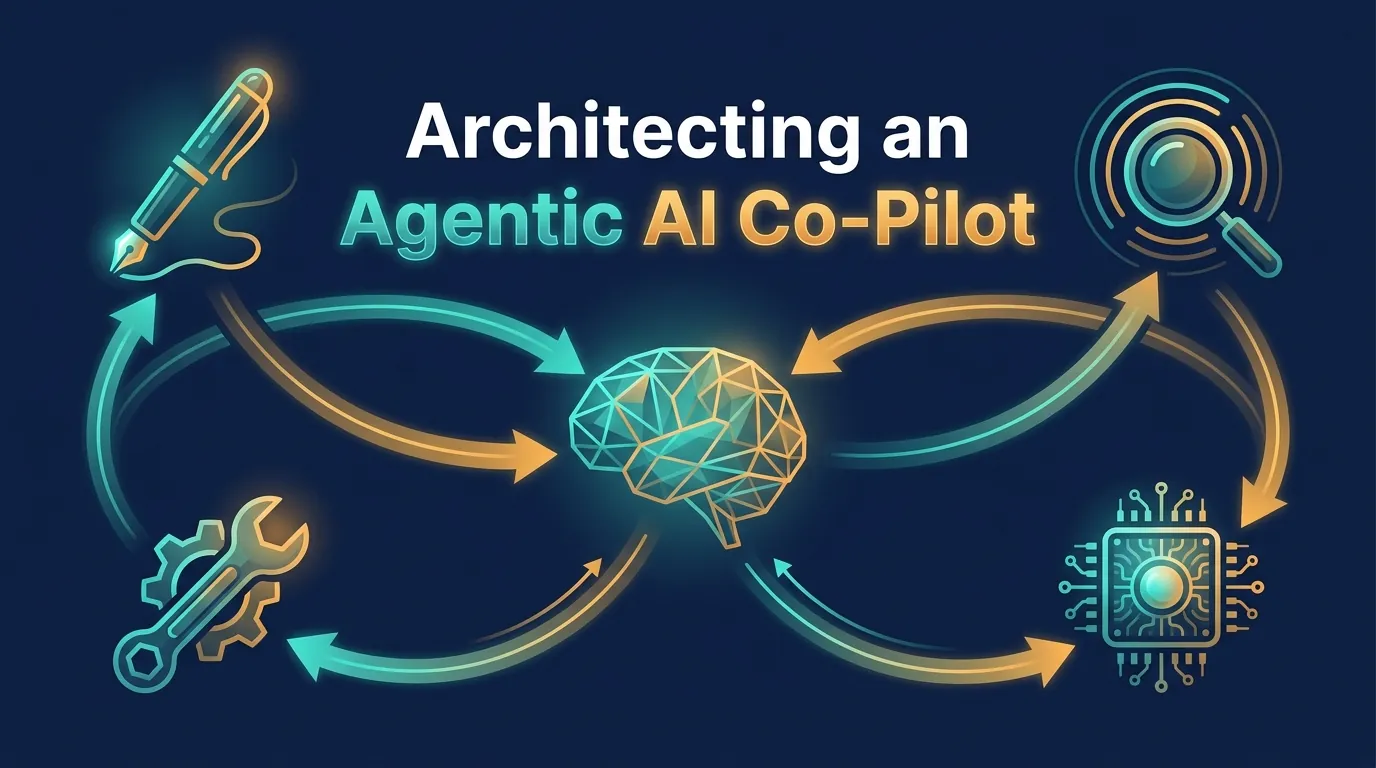
Beyond Raw LLMs: Architecting an Agentic AI Co-Pilot for Content Creation
Raw LLMs answer one prompt and forget. Agentic AI adds memory, planning, tools and self-checks. A walkthrough of a blog post co-pilot built from small agents.

Watch the video
TL;DR
A raw LLM answers one prompt at a time. It has no memory between calls, no plan, and no way to check facts or call tools. An agentic system uses the LLM as the reasoning engine and adds those missing parts: memory, planning, tools and a loop that checks its own work. This post walks through one example, a blog post co-pilot made of small agents (researcher, outliner, writer, editor, SEO), and the design patterns behind it.
Introduction: The Paradigm Shift from LLMs to Agentic AI
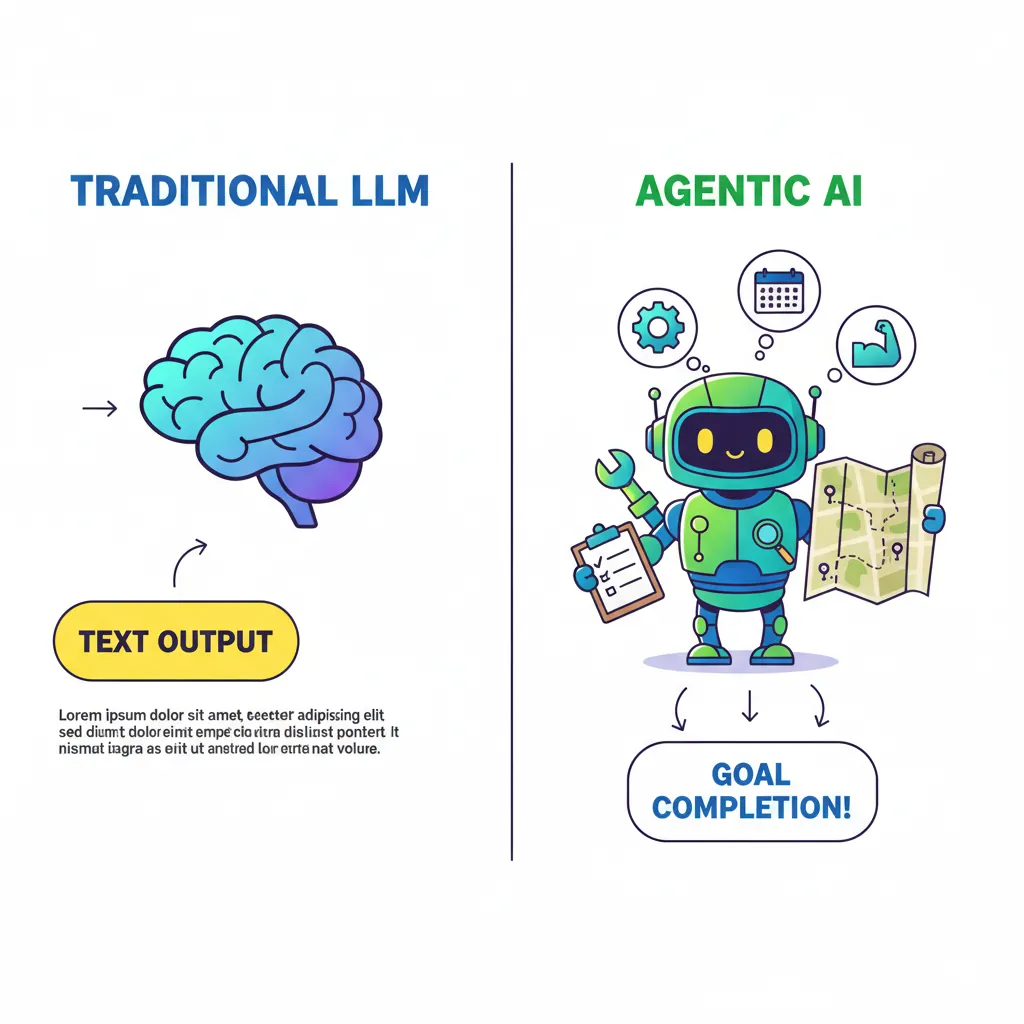
ChatGPT, Gemini and Claude can write, summarize and translate better than most of us expected a few years ago. But on its own, an LLM is reactive. You send a prompt, it sends text back, and then it forgets. It does not plan, it does not look anything up, and it does not notice when it is wrong.
It is a strong engine without a driver or a map.
Agentic AI adds the driver and the map. Instead of one prompt and one answer, the system breaks a goal into steps, uses tools to get real data, keeps track of what it has done, and checks its output before handing it over. Content creation is a good place to see this, because writing a decent post is already a multi-step job: research, outline, draft, edit, optimize, share.
Core Concepts: LLMs vs. Agentic Systems
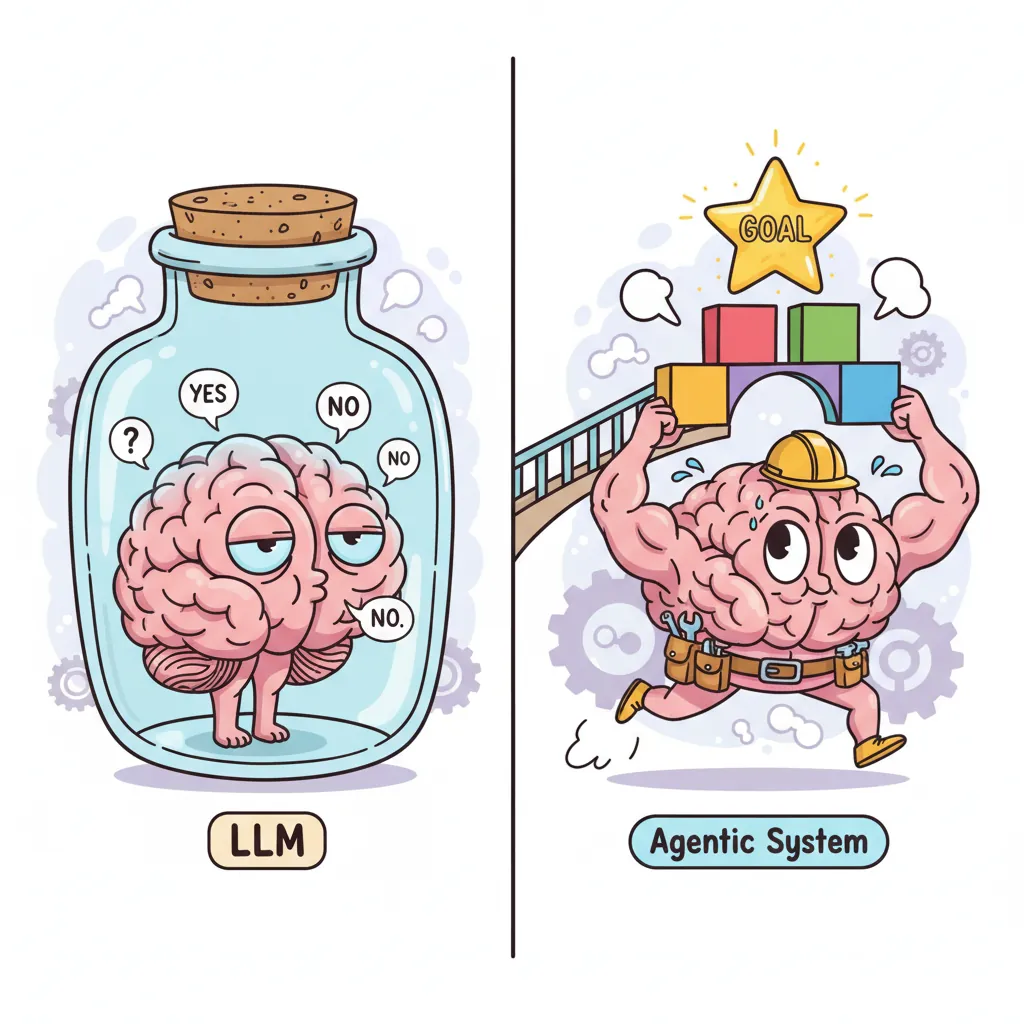
An LLM like GPT-4 or LLaMA is a pattern matcher trained on trillions of tokens. It is very good at context and at producing a relevant reply within one prompt-response cycle.
That cycle is also its limit:
- No memory beyond the current context window
- No planning for tasks that take several steps
- No contact with the world, so no fresh data and no way to run anything
The result is the familiar hallucination: confident, plausible and wrong.
An agentic system keeps the LLM as its reasoning engine and wraps it with:
- Memory: short-term context for the current task and a long-term store for knowledge and preferences
- Planning: splitting a big task into steps it can actually finish
- Tools: APIs, web search, databases, code interpreters
- Feedback: checking its own output and correcting it
With those pieces, a text generator becomes something that can run a multi-stage workflow and improve on its own attempts. Grounding answers in real sources through tools and RAG (Retrieval Augmented Generation) also cuts down hallucinations, because the model is no longer guessing from memory alone.
Case Study: A Technical Overview of the AI Blog Post Co-Pilot
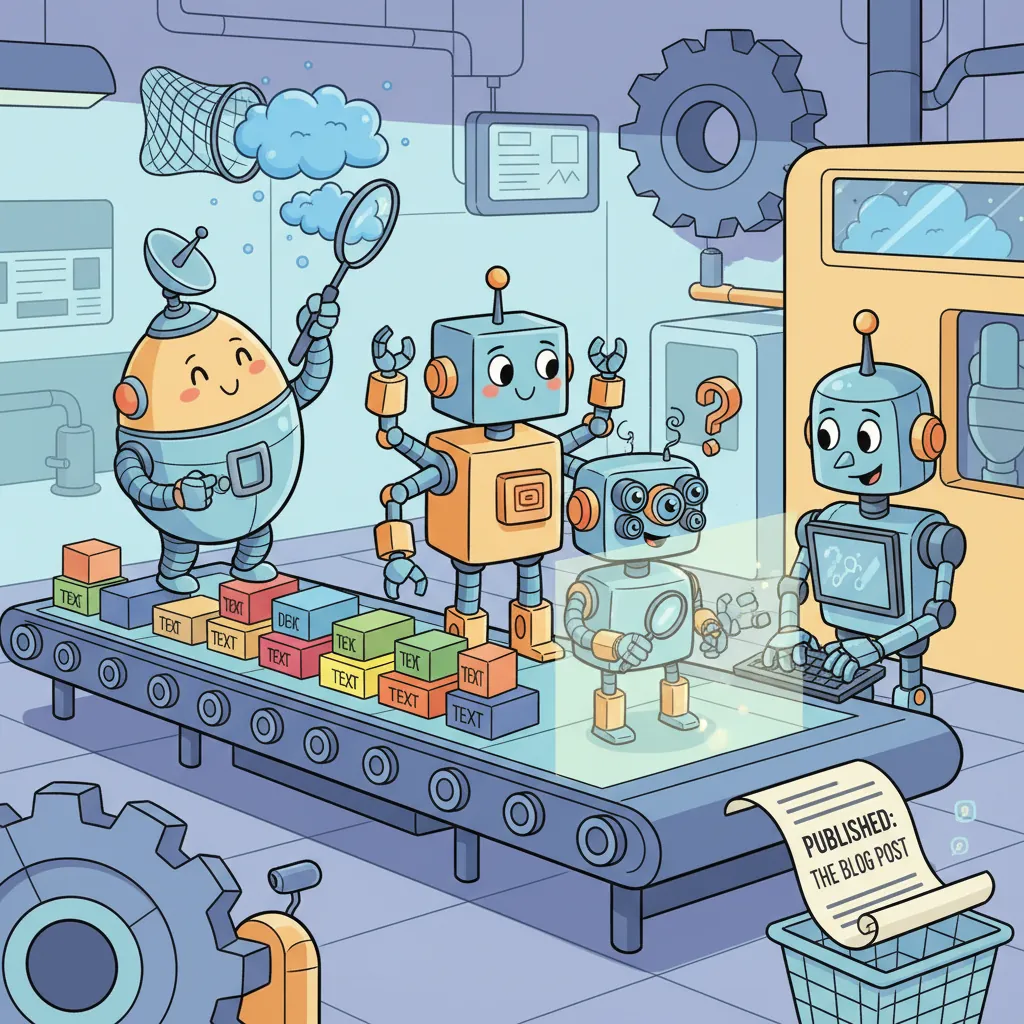
The co-pilot is a team of small agents, each with one job.
- Orchestrator Agent: takes the brief (topic, audience, tone) and splits "write a blog post" into sub-goals
- Researcher Agent: gathers current, relevant information with RAG
- Outline Agent: builds the structure, using search results to see what people actually look for
- Drafting Agents: write each section from the outline and the research
- Editor Agent: reviews in several passes for coherence, facts, grammar and tone
- SEO Optimizer Agent: writes the meta description, title tag and keywords
None of these steps is new. A human writer does all of them. The difference is that each agent has a narrow job and a clear handoff, so the whole thing can run, check itself and run again.
Key Features of the Agentic Workflow
Task decomposition and planning
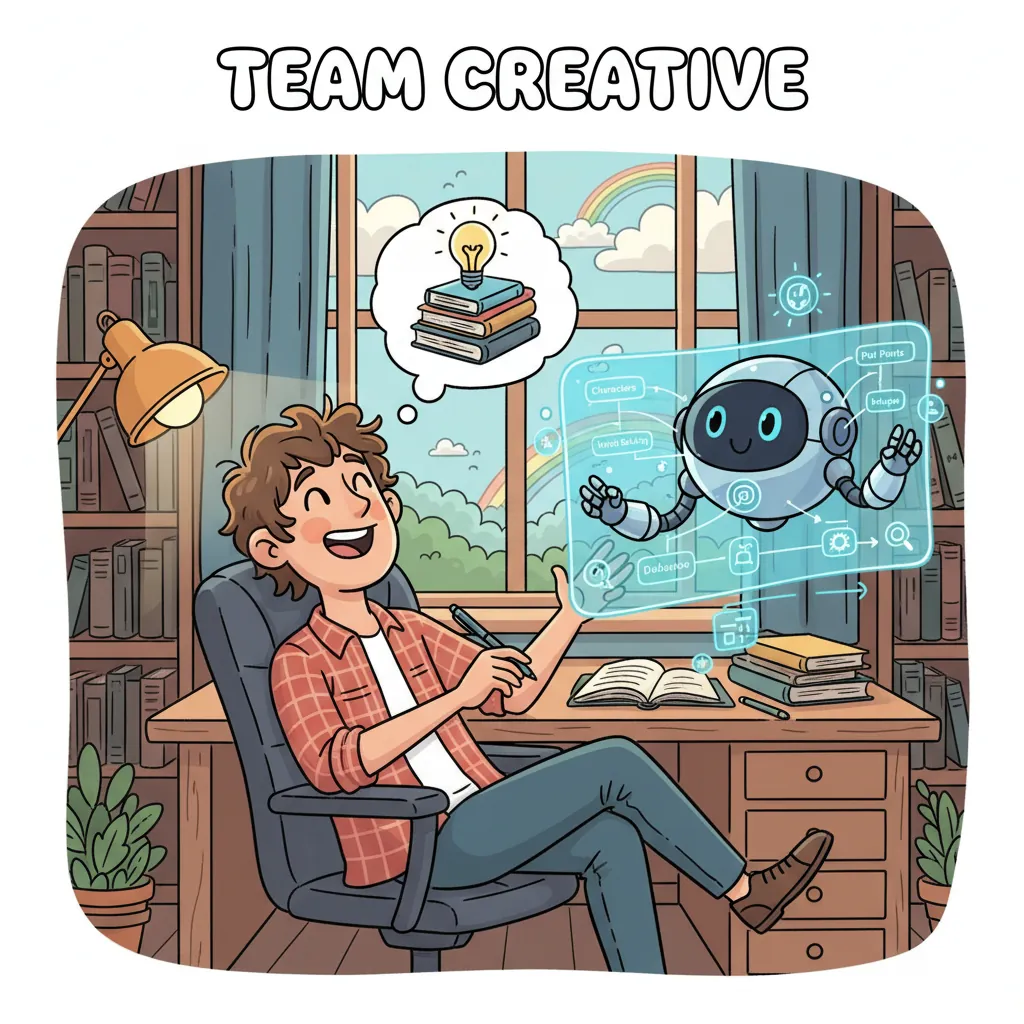
A plain LLM gets "write a blog post about X" and starts typing. An agentic system first turns it into a plan: research, outline, draft each section, review, optimize. A lot of a writer's time goes into that planning and research before the first sentence. Handing it to the system leaves the human with the decisions that matter: the angle, the opinion, the story.
Context and persistent memory
Context windows are limited, so long pieces drift. Tone changes halfway, facts from the intro get contradicted later. Persistent memory keeps the goal, the earlier sections, the style rules and the feedback available across the whole piece and across sessions. You stop repeating the same instructions.
Tools and outside knowledge
Training data goes stale. Tools fix that: search for current facts, grammar checkers, SEO tools, an internal knowledge base. The agent can look something up instead of making it up.
Self-correction
After the first draft, the system checks its own work against clear criteria: readability, keywords, facts, brand voice. Then it revises. The human editor gets a better second draft instead of fixing typos in a first one.
Architecting Intelligence: Agentic Design Patterns in Practice
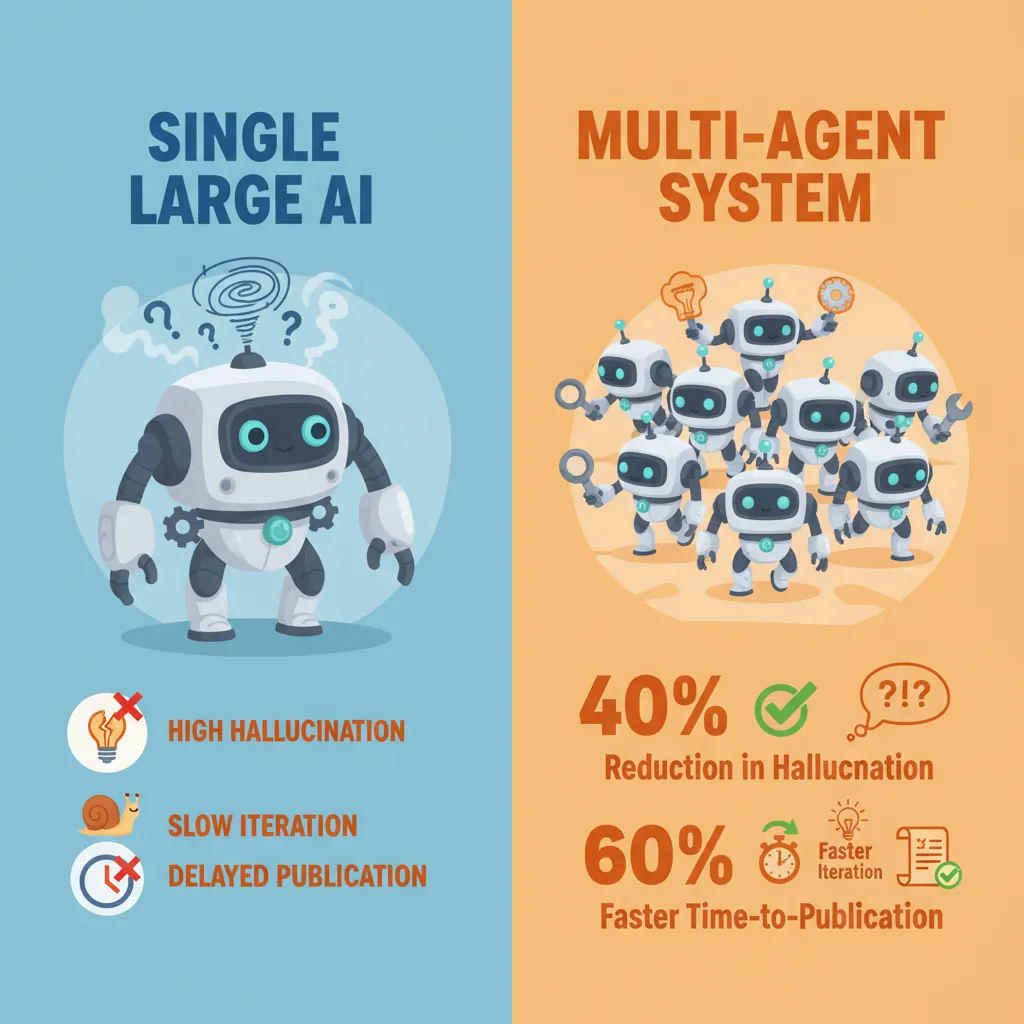
Good agentic design looks less like one big model and more like a small team.
Specialized agents
Instead of asking one LLM to write the whole post, split the work: a Brainstormer for ideas, a Researcher for facts, an Outliner for structure, a Draftsman for prose. A narrow prompt with narrow context gives the model less room to wander, and that means fewer made-up details.
Orchestration
An Orchestrator passes tasks and intermediate results between agents and keeps the work moving from idea to draft. Each agent has two kinds of memory: a short-term scratchpad for the current task, and a long-term store (often a vector database) for user preferences, brand rules and writing style. Agents do not forget feedback from the last round.
Reflection
This is the pattern I find most useful. A Critic Agent reads each draft against fixed criteria (readability, SEO, tone, facts) and sends specific feedback to the Draftsman, who revises. It is a human editor's review, at machine speed, repeated until the draft passes.
The End-to-End Workflow: From Idea to Amplification
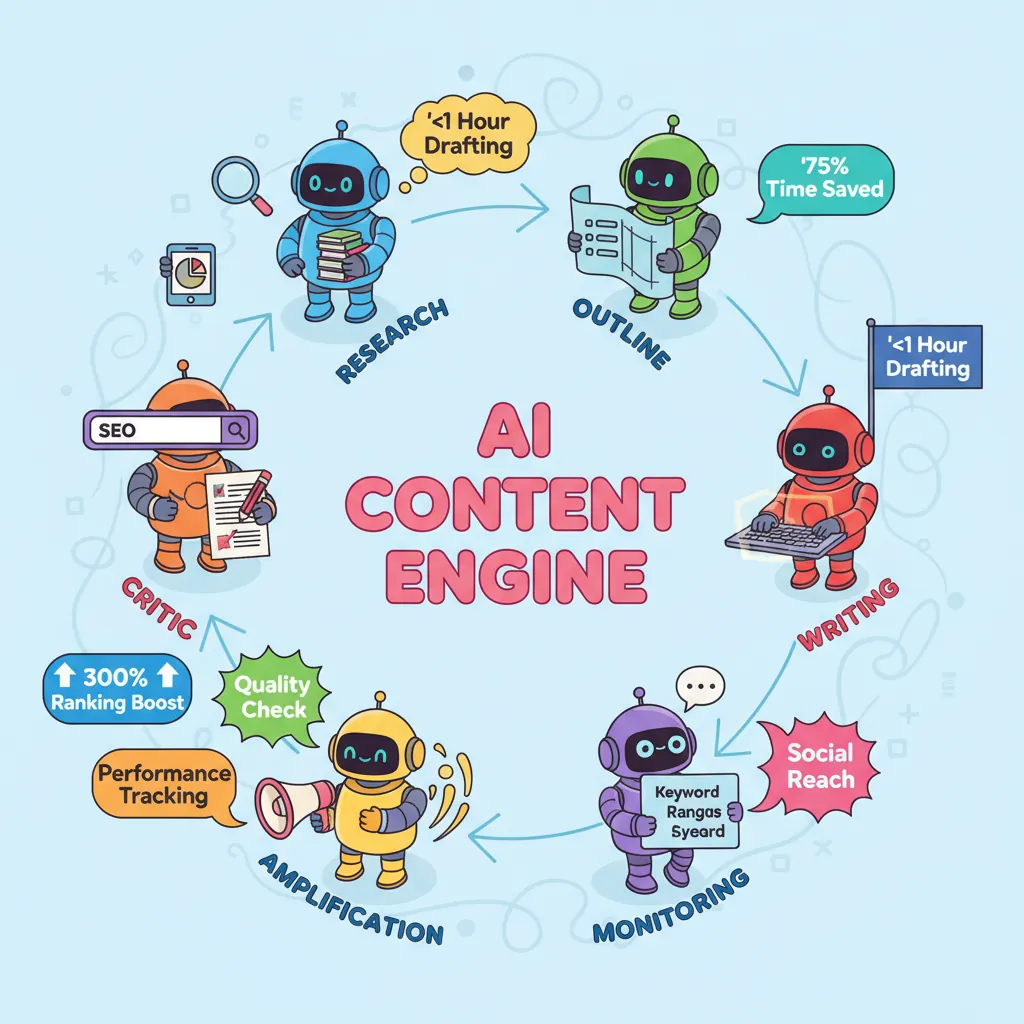
Here is the full path for one post.
- Idea: the user gives a seed, say "the future of sustainable tech"
- Research: the Research Agent checks trends, competitors and keywords, and finds narrower angles such as "circular economy models in consumer electronics", with less competition and clearer intent
- Outline: the Outline Agent builds the structure with H1 to H3 headings and internal link ideas
- Draft: Writing Agents fill in each section from the research and the style guide, in parallel
- Review: the Critic Agent checks grammar, facts, plagiarism risk and brand voice, while the SEO Agent tunes metadata, keyword variations and links
- Amplify: the Amplification Agent turns the article into a Twitter thread, a LinkedIn post, a newsletter snippet or a video script
- Learn: a Performance Agent tracks views, engagement and conversions, and feeds that back into how the agents behave next time
The last step is the one most setups skip. Without it, the system never learns which posts actually worked.
Conclusion: Empowering Developers with Intelligent Automation

The blog co-pilot is one example, but the shape works for a lot of developer work that is not code: research, documentation, technical writing. Small agents with narrow jobs, a planner, memory, tools and a critic.
It does not replace the person. It takes the repetitive steps so the person can spend time on the parts that need judgement.
What I am still working out is where to put the human in the loop. Too early and you are just prompting by hand. Too late and you are cleaning up a confident mess.
- #Agentic AI
- #LLM
- #DevOps
- #Workflows
- #Agentic AI design patterns